ASUS Zenbook S16 Review: A Premium OLED Ultrabook That Balances Power and Portability.
The ASUS Zenbook S16 combines AMD Ryzen AI performance, a stunning 3K OLED display, premium ultrathin design, and modern AI-focused features into one of the most refined Windows ultrabooks currently available. With its lightweight ceraluminum chassis, impressive battery life, and creator-friendly experience, the Zenbook S16 positions itself as a serious alternative to premium laptops from Apple, Dell, and Samsung.
Premium Windows ultrabooks have become increasingly competitive over the past few years. Thin-and-light laptops are no longer judged purely on portability alone. Buyers now expect flagship displays, all-day battery life, creator-grade performance, strong AI capabilities, and premium build quality — all without sacrificing thermals or everyday usability.
The ASUS Zenbook S16 enters that category with ambitious goals. ASUS is positioning the laptop as a modern AI-powered ultrabook designed for professionals, creators, students, and users who want a large-screen premium experience without carrying a bulky workstation. The device combines AMD Ryzen AI processors, a high-refresh-rate OLED display, a lightweight chassis, and dedicated AI acceleration into an impressively slim package. :contentReference[oaicite:0]{index=0}
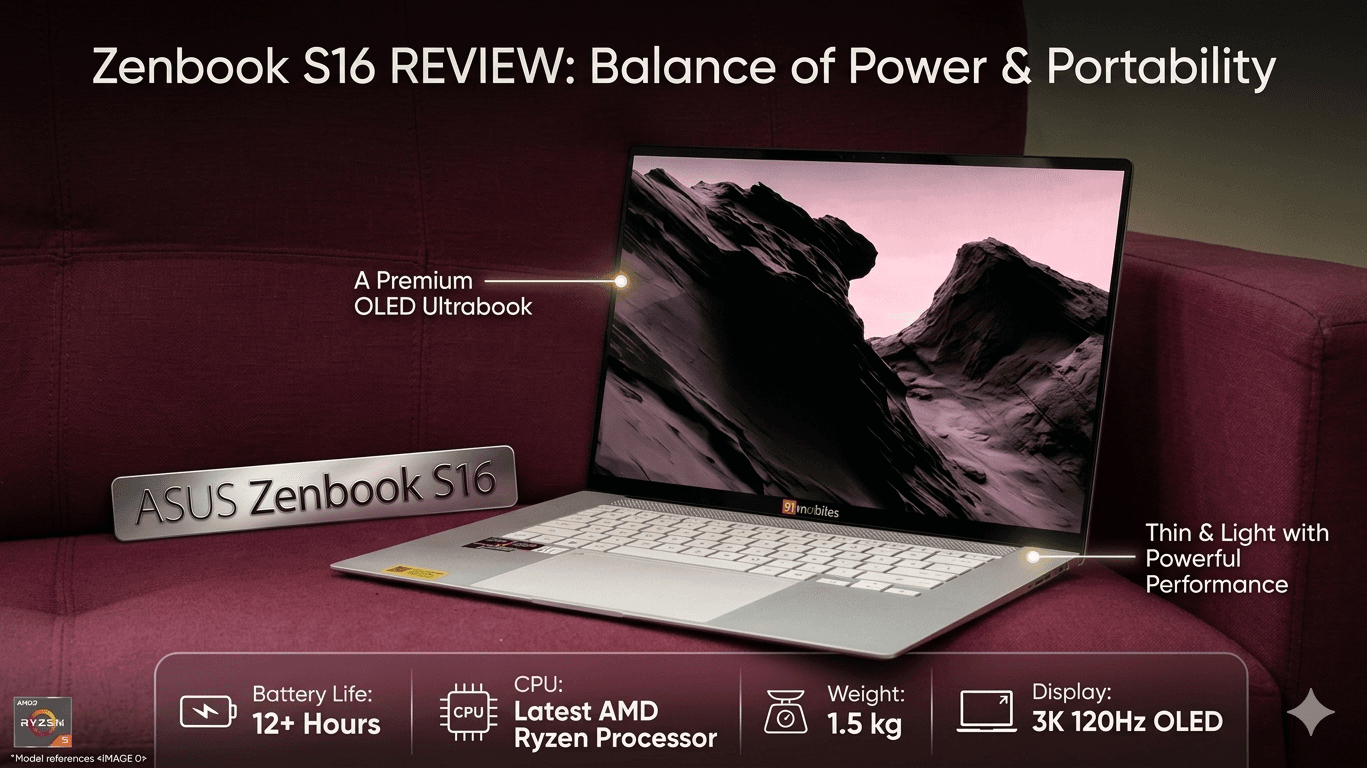
On paper, the Zenbook S16 looks almost too good to be true. A 16-inch laptop measuring roughly 1.1cm thin and weighing close to 1.5kg sounds unusually portable for its size category. ASUS also introduces its unique “Ceraluminum” material, which blends ceramic and aluminum properties to create a more durable and premium-feeling finish. :contentReference[oaicite:1]{index=1}
After analyzing reviews, technical impressions, and user discussions, the Zenbook S16 increasingly feels like ASUS attempting to build the ideal everyday premium laptop — one that balances performance, portability, multimedia quality, and battery efficiency without leaning too aggressively toward gaming or workstation workloads.
Design & Build
The ASUS Zenbook S16 immediately stands out because of its physical design. Despite featuring a large 16-inch display, the laptop feels remarkably slim and lightweight compared to many traditional productivity laptops in this segment. ASUS has managed to keep the chassis around 1.1cm thin while maintaining structural rigidity. :contentReference[oaicite:2]{index=2}
Much of that premium feel comes from the company’s new Ceraluminum finish. ASUS describes it as a fusion of ceramic and aluminum designed to improve durability while reducing fingerprints and maintaining a softer matte texture. Multiple reviewers praised the material for making the laptop feel noticeably more premium than conventional aluminum ultrabooks. :contentReference[oaicite:3]{index=3}
- Ultra-thin 16-inch design
- Premium Ceraluminum chassis
- Approximately 1.5kg lightweight build
- Large precision touchpad and comfortable keyboard
- Strong port selection without relying heavily on dongles
ASUS also avoids one common ultrabook compromise by including a healthy selection of ports. Unlike many premium thin laptops that depend almost entirely on USB-C, the Zenbook S16 includes practical connectivity options that reduce dongle dependency during daily work. :contentReference[oaicite:4]{index=4}
The overall design philosophy feels mature. ASUS is not chasing flashy gaming aesthetics here. Instead, the laptop focuses on elegance, portability, and practicality.
Display Experience
The Zenbook S16 features one of the laptop’s strongest highlights: a 16-inch 3K ASUS Lumina OLED display with a 120Hz refresh rate. Reviewers consistently describe the panel as vibrant, sharp, and excellent for both entertainment and productivity usage. :contentReference[oaicite:5]{index=5}
OLED technology continues to be one of ASUS’ biggest strengths across the Zenbook lineup. Blacks appear deep, contrast levels are exceptional, and HDR content looks noticeably more immersive compared to standard IPS displays.
The 120Hz refresh rate also improves fluidity across everyday tasks. Animations, scrolling, multitasking, and navigation all feel smoother and more responsive compared to conventional 60Hz laptops.
Brightness levels have reportedly improved further in newer Zenbook S16 revisions, with HDR brightness reaching extremely high levels for media consumption and creative workflows. :contentReference[oaicite:6]{index=6}
Whether you are editing photos, watching Netflix, working across multiple browser tabs, or simply reading documents, the display consistently feels premium.
Performance & Daily Usage
ASUS equips the Zenbook S16 with AMD Ryzen AI processors, including Ryzen AI 9 variants paired with integrated Radeon graphics and dedicated NPUs for AI acceleration. The laptop is clearly designed around modern productivity and AI-assisted workflows rather than purely gaming-focused workloads. :contentReference[oaicite:7]{index=7}
Everyday responsiveness appears excellent across reviews. Web browsing, multitasking, office workloads, media editing, and content creation all run comfortably on the system. Users also consistently praise the laptop’s keyboard, trackpad, and overall workflow experience. :contentReference[oaicite:8]{index=8}
The ASUS Zenbook S16 feels like a laptop designed for people who want one machine that can comfortably handle productivity, entertainment, creative work, and portability all at once.
AI functionality also plays a larger role this generation. Ryzen AI processors include dedicated NPUs capable of accelerating on-device AI workloads and Copilot+ features. ASUS markets the Zenbook S16 heavily as an AI PC optimized for modern Windows workflows. :contentReference[oaicite:9]{index=9}
Thermal behavior, however, remains somewhat mixed depending on workload expectations. Some users describe the laptop as impressively quiet and efficient during regular usage, while others report higher temperatures under sustained heavy creative or gaming workloads. :contentReference[oaicite:10]{index=10}
For mainstream productivity and creative tasks though, performance appears consistently strong and well-balanced.
Audio, Keyboard & Everyday Comfort
ASUS has equipped the Zenbook S16 with a six-speaker audio system supporting Dolby Atmos, and multiple reviews specifically praise the laptop’s speaker quality. The sound profile feels fuller and more immersive than many competing ultrabooks. :contentReference[oaicite:11]{index=11}
The keyboard experience also receives consistently positive feedback. Key travel remains comfortable despite the thin chassis, and the large touchpad contributes heavily to the laptop’s premium usability.
Community discussions around long-term usage are generally positive as well, with many users praising battery endurance, build quality, and overall satisfaction after months of ownership. :contentReference[oaicite:12]{index=12}
Combined with the OLED panel and lightweight chassis, the overall everyday user experience becomes one of the Zenbook S16’s strongest selling points.
Battery Life & Efficiency
Battery life remains one of the most important aspects of any premium ultrabook, and the Zenbook S16 performs well overall. Depending on workload and power profile settings, reviews report battery endurance ranging from roughly 10 to 15 hours under mixed usage scenarios. :contentReference[oaicite:13]{index=13}
ASUS has also increased battery capacity in newer Zenbook S16 revisions, helping improve endurance further. Efficient Ryzen AI processors contribute heavily to maintaining strong unplugged performance while balancing thermals and power consumption. :contentReference[oaicite:14]{index=14}
While ARM-based competitors and MacBooks may still hold an advantage in absolute battery longevity, the Zenbook S16 delivers strong endurance for a large OLED Windows ultrabook. :contentReference[oaicite:15]{index=15}
For most productivity-focused users, the battery experience should comfortably support full workdays without major anxiety.
Final Verdict
The ASUS Zenbook S16 succeeds because it understands exactly what modern premium laptop buyers increasingly want: a lightweight machine with a large immersive display, strong everyday performance, excellent multimedia capabilities, modern AI features, and premium design without sacrificing portability.
The OLED display is exceptional, the Ceraluminum build helps the laptop stand out visually, and the overall balance between productivity, portability, and entertainment feels extremely well executed.
Thermal limitations under sustained heavy workloads and premium pricing may still push some power users toward larger performance-oriented laptops. But for users looking for a high-end everyday ultrabook, the Zenbook S16 feels remarkably complete.
In many ways, the ASUS Zenbook S16 represents what modern Windows ultrabooks are increasingly becoming: thinner, smarter, more efficient, and far more enjoyable to use daily.