Nothing Phone (3) Review: Bold Design, Smart Software, and a Different Kind of Flagship.
The Nothing Phone (3) takes a very different approach to the modern Android flagship formula. Instead of chasing raw benchmark dominance, Nothing focuses on design, software personality, AI-assisted features, and a uniquely interactive Glyph Matrix interface. Powered by the Snapdragon 8s Gen 4 chipset and paired with a triple 50MP camera system, the Phone (3) aims to deliver a premium experience that feels genuinely different in a market filled with increasingly similar smartphones.
Smartphone launches have become increasingly predictable. Most flagship devices today focus on slightly faster processors, brighter displays, and larger camera sensors while keeping overall experiences relatively similar. Nothing, however, continues trying to break that pattern.
The Nothing Phone (3) is the company’s most ambitious smartphone yet. It arrives with a redesigned Glyph Matrix interface, Qualcomm’s Snapdragon 8s Gen 4 chipset, upgraded cameras, AI-powered software features, and a noticeably more premium overall approach compared to previous Nothing phones. The company is positioning this device as its first true flagship smartphone — and naturally, expectations are significantly higher this time. ([gadgets360.com](https://www.gadgets360.com/mobiles/news/nothing-phone-3-price-in-india-launch-specifications-features-8808591?utm_source=chatgpt.com))
But the Nothing Phone (3) enters one of the most competitive premium smartphone markets we have seen in years. Devices from Samsung, OnePlus, Xiaomi, Google, and Apple already dominate the segment with mature ecosystems and top-tier hardware.
That makes the Phone (3) particularly interesting. Nothing is not simply trying to compete through specifications alone. Instead, the company is attempting to create a smartphone that feels more expressive, visually distinctive, and personality-driven than most modern Android devices.
Design & Build
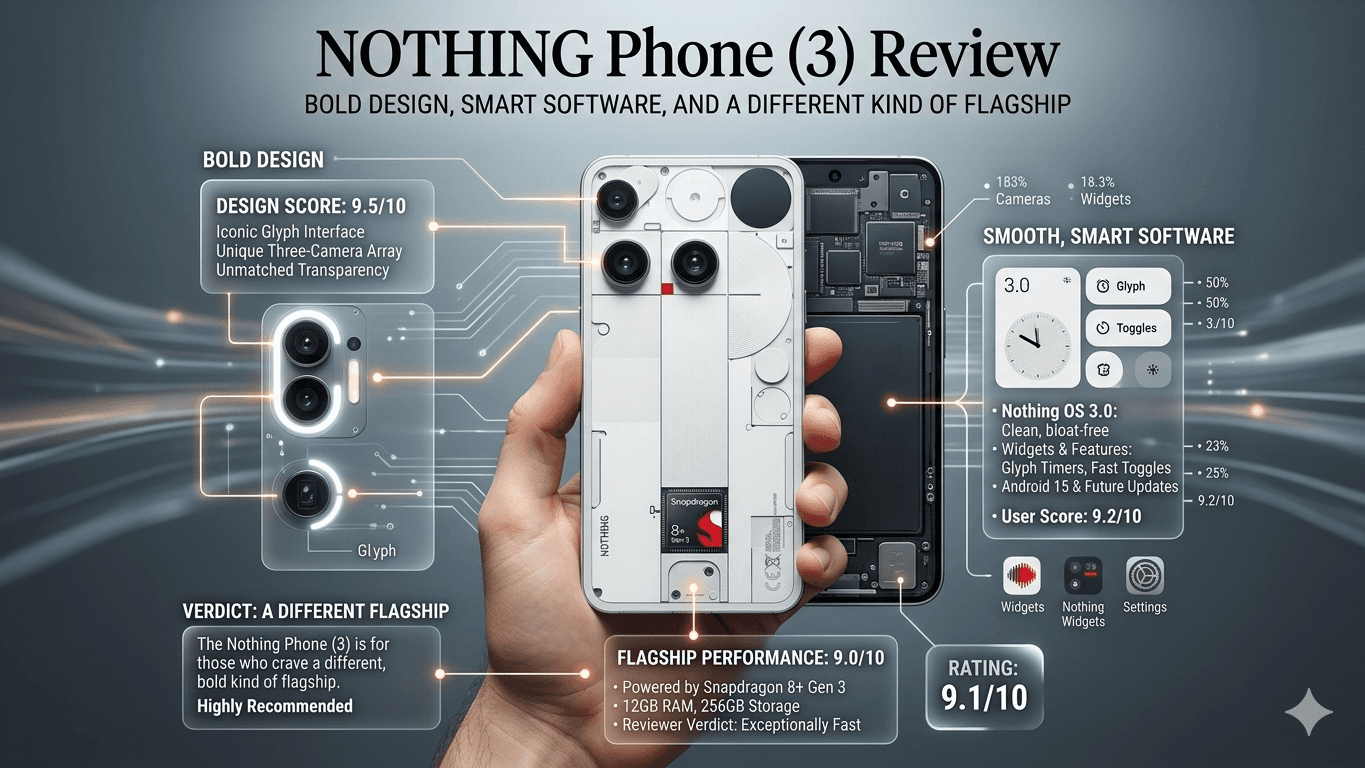
Design remains the biggest reason people immediately notice a Nothing phone, and the Phone (3) pushes that identity even further. The transparent-inspired rear aesthetic remains, but Nothing has significantly evolved the lighting system this year.
Instead of the earlier Glyph LED strips, the company now introduces the new Glyph Matrix — a circular dot-matrix lighting interface positioned near the top-right corner of the rear panel. The system supports animations, notifications, widgets, charging indicators, mini-games, and customizable visual interactions. Multiple reviewers described the feature as surprisingly fun and more practical than expected. ([wired.com](https://www.wired.com/review/nothing-phone-3?utm_source=chatgpt.com))
The overall design feels intentionally unconventional. The asymmetrical camera placement and exposed industrial styling make the device instantly recognizable, although community reactions remain somewhat divided regarding the aesthetics. ([reddit.com](https://www.reddit.com/r/Android/comments/1lp825c/?utm_source=chatgpt.com))
- Distinctive transparent-inspired design
- New Glyph Matrix interactive lighting system
- IP68 water and dust resistance
- Premium aluminum and glass construction
- Available in Black and White finishes
Whether you love or dislike the design, the Nothing Phone (3) undeniably feels different — and that alone already separates it from many competing flagships.
Display Experience
The Nothing Phone (3) features a large 6.7-inch AMOLED display with a 120Hz refresh rate and high brightness output. The panel delivers strong contrast levels, vibrant colors, and smooth responsiveness across daily usage. ([phonearena.com](https://www.phonearena.com/phones/Nothing-Phone-3_id12615?utm_source=chatgpt.com))
Navigation feels fluid, scrolling remains consistently smooth, and gaming benefits from responsive touch performance. Streaming content also looks excellent thanks to the OLED panel’s deep blacks and balanced color tuning.
Some enthusiasts have criticized the lack of a more advanced LTPO implementation considering the phone’s premium pricing, especially when competing flagship devices offer more adaptive refresh technologies. ([reddit.com](https://www.reddit.com/r/NOTHING/comments/1m1ommc/design_flagship_and_nothing_immune_to_criticism/?utm_source=chatgpt.com))
Still, for most users, the overall display experience feels premium, modern, and well-optimized for entertainment and everyday usage.
Performance & Daily Usage
Powering the Nothing Phone (3) is Qualcomm’s Snapdragon 8s Gen 4 processor paired with up to 16GB RAM and 512GB storage. While this is not Qualcomm’s absolute top-tier Snapdragon 8 Elite platform, performance remains strong across daily workloads. ([androidcentral.com](https://www.androidcentral.com/phones/nothing-phones/nothing-phone-3-review?utm_source=chatgpt.com))
Applications launch quickly, multitasking feels responsive, and Nothing OS continues to be one of the cleanest Android software experiences currently available. The software remains heavily focused on minimalism, monochrome aesthetics, and reducing unnecessary distractions.
The Nothing Phone (3) feels less like a specification race and more like a smartphone designed around personality, interaction, and software experience.
AI features also play a larger role this year. Essential Space, contextual organization tools, and AI-powered interactions are integrated directly into Nothing OS. The implementation feels more subtle than aggressive AI branding approaches from some competitors.
Gaming performance is solid for most titles, though some reviewers reported noticeable thermal buildup during heavier gaming sessions. ([youtube.com](https://www.youtube.com/watch?v=6s6FF-wljuM&utm_source=chatgpt.com))
For mainstream flagship users, the overall performance experience remains smooth and enjoyable even if the device is not benchmark-focused.
Camera Performance
The Nothing Phone (3) includes a triple 50MP rear camera setup featuring a periscope telephoto sensor with 3x optical zoom support. The addition of a proper telephoto system represents a meaningful upgrade compared to earlier Nothing devices. ([gadgets360.com](https://www.gadgets360.com/mobiles/news/nothing-phone-3-price-in-india-launch-specifications-features-8808591?utm_source=chatgpt.com))
Daylight photography generally performs well with balanced colors and good sharpness. Nothing’s image processing avoids excessive saturation, helping photos maintain a cleaner and more natural appearance.
Zoom photography and portrait shots especially benefit from the new telephoto hardware. However, several reviewers noted that camera consistency still trails behind established premium camera leaders from Samsung, Vivo, Google, and Xiaomi. ([androidcentral.com](https://www.androidcentral.com/phones/nothing-phones/nothing-phone-3-review?utm_source=chatgpt.com))
For casual users and social-media-focused photography, the camera system remains more than capable, even if it does not completely dominate the flagship segment.
Battery Life & Software Experience
Battery life on the Nothing Phone (3) is supported by a 5,150mAh battery alongside 65W wired charging and wireless charging support. Real-world endurance appears generally strong across mixed daily usage. ([phonearena.com](https://www.phonearena.com/reviews/nothing-phone-3-review_id7482?utm_source=chatgpt.com))
Nothing OS remains one of the phone’s biggest strengths. The software feels visually distinct without becoming bloated or overwhelming. Smooth animations, clean widgets, monochrome themes, and thoughtful interface design help create an experience that feels refreshingly different from most Android skins.
Nothing also promises five years of Android updates and seven years of security patches, significantly improving the long-term value proposition. ([wired.com](https://www.wired.com/review/nothing-phone-3?utm_source=chatgpt.com))
Combined with the Glyph Matrix system and AI-assisted software tools, the overall software experience becomes one of the most distinctive aspects of owning the Phone (3).
Final Verdict
The Nothing Phone (3) is not trying to be the safest flagship smartphone available today — and that is exactly what makes it interesting.
The device combines bold industrial design, a unique Glyph Matrix system, clean software, strong daily performance, and thoughtful interaction design into a package that feels genuinely different from mainstream Android alternatives.
The phone does face legitimate criticism regarding pricing, thermal behavior, and camera competitiveness compared to similarly priced rivals. Buyers prioritizing absolute performance or photography leadership may still prefer alternatives from Samsung, OnePlus, or Xiaomi.
But for users who value individuality, software personality, and a smartphone experience that feels less generic, the Nothing Phone (3) becomes one of the most refreshing Android devices currently available.