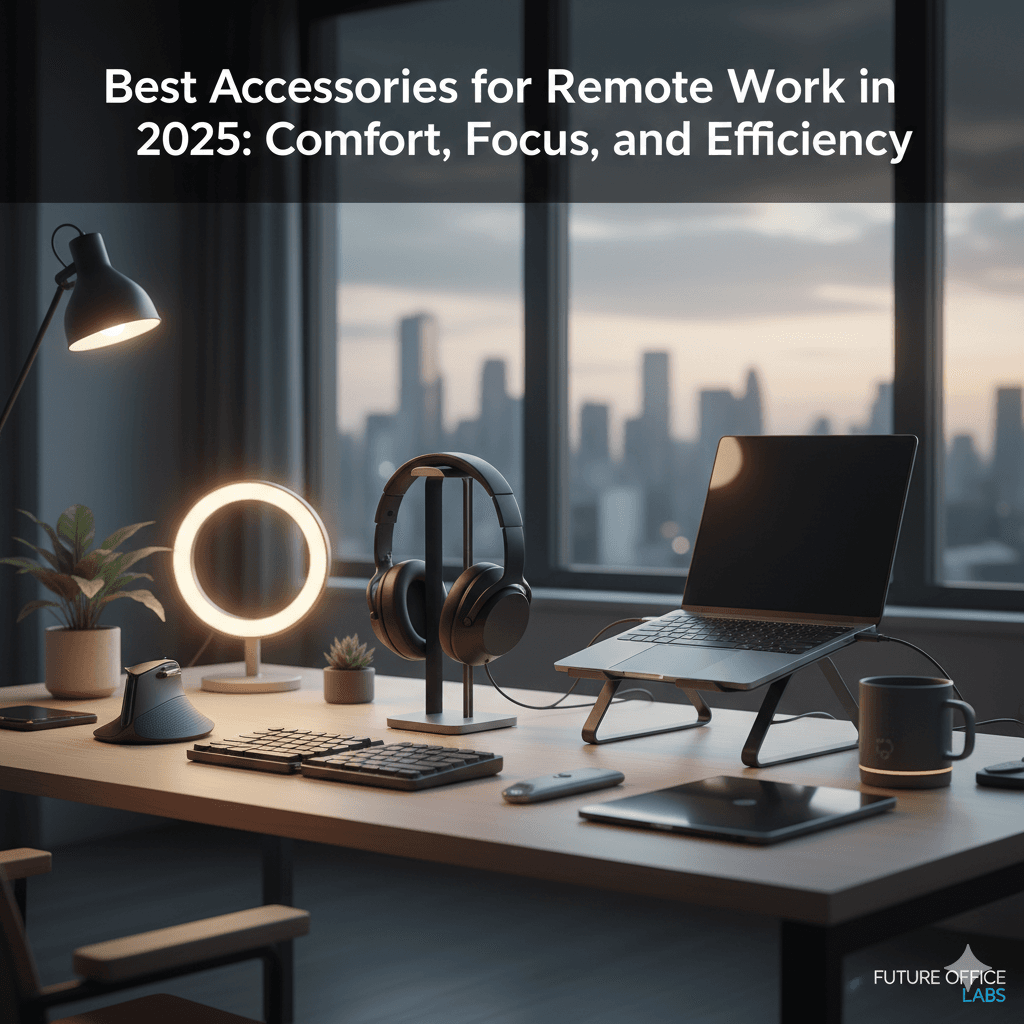
Best Accessories for Remote Work in 2026: Comfort, Focus, and Efficiency.
Remote work is no longer temporary — it’s a lifestyle. The right accessories can dramatically improve comfort, focus, and productivity. Here’s a curated list of must-have remote work accessories for 2026.
Remote work has redefined how we think about productivity. Without the structure, boundaries, and ergonomics of a traditional office, individuals are left to design their own environments — for better or worse.
Kitchen tables, couches, and poorly sized desks may work short term, but over time they often lead to fatigue, discomfort, and reduced focus. As remote work becomes a long-term reality, comfort and ergonomics are no longer optional luxuries.
Investing in the right accessories can reduce physical strain, improve mental clarity, and create a workspace that supports deep focus and long hours of productive work.
Ergonomic Chair
A quality ergonomic chair is the foundation of any effective remote work setup. Since most remote professionals spend several hours seated each day, proper posture support plays a critical role in long-term health.
Features such as adjustable lumbar support, seat depth, and armrests help maintain a neutral spine position and reduce pressure on the lower back and shoulders.
When choosing a chair, look for breathable materials, adjustable height, tilt control, and a design that encourages subtle movement rather than rigid sitting.
External Monitor
Screen space has a direct impact on efficiency. A single small display often forces constant window switching, breaking concentration and slowing down everyday tasks.
An external monitor allows you to spread out your work — keeping reference material, communication tools, and primary tasks visible at the same time. This is especially valuable for developers, designers, and analysts.
Ultrawide monitors are particularly effective for multitasking and creative workflows, offering a seamless workspace without the distraction of bezels between screens.
Noise-Canceling Headphones
Background noise is one of the most common productivity killers in remote environments. Household sounds, conversations, and city noise can quickly disrupt concentration.
Noise-canceling headphones help create a controlled audio environment, making it easier to focus during deep work sessions or important meetings, especially in shared or unpredictable spaces.
Focus isn’t about working harder — it’s about removing distractions.
Mechanical Keyboard & Mouse
Input devices are often overlooked, yet they directly influence comfort and efficiency. Typing and cursor movement are repetitive actions that add up over thousands of hours.
Mechanical keyboards with tactile switches provide consistent feedback and reduce finger fatigue during long typing sessions, making them a popular choice among professionals.
Pairing a quality keyboard with an ergonomic mouse or trackball further improves wrist alignment and helps prevent strain-related injuries over time.
Final Takeaway
Building an effective remote workspace is ultimately an investment in long-term health, focus, and sustainability. Small, thoughtful upgrades compound over time.
By prioritizing ergonomics and minimizing distractions, remote workers can create an environment that supports both productivity and well-being — allowing work to feel more natural and less exhausting.